
Undercurrents Ep. #2 transcript: Who's to blame for the energy crisis?
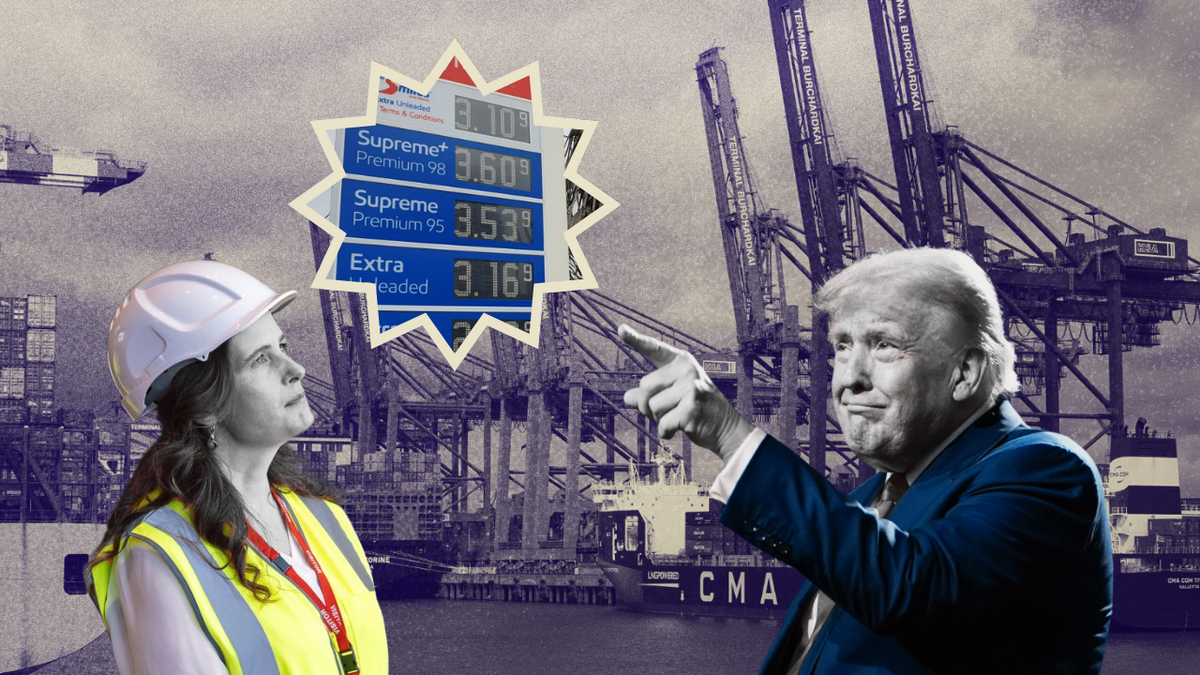
Read the transcript of the second episode of Public Interest's fortnightly current affairs show, Undercurrents.
This is an edited transcript of the conversation between lawyer and Anti-War Aotearoa spokesperson Gabriella Brayne, researcher at the Centre for International Corporate Tax Accountability and Research Edward Miller, union organiser Justine Sachs, and Undercurrents host Ollie Neas. You can view the full episode here.
Ollie
To set the scene here, it's been two months since this all started. If we turn back the clock two months, the United States and Iran were in the middle of negotiations about Iran's nuclear program. And then out of nowhere, the United States and Israel launched large-scale airstrikes on Iran, killing the Iranian Supreme Leader and other government officials and destroying infrastructure. Iran responded with strikes of its own against Israel, against US military bases in the region, of which there are many, and against other targets as well. That resulted in the closure of the Strait of Hormuz. And it's massively disrupted the supply of oil and other commodities.
We're now two months on. We've heard about peace talks. These are underway, but the prospects for resolution anytime soon, I think, are far from certain. Now, obviously, this is about much more than a fuel crisis. There's a war underway here, and I don't want to lose sight of that. But I do want to start by focusing on the economic dimensions to this. So, this has been called by some the biggest energy crisis in history. I'm not entirely sure exactly what that means, but how serious is this really? How does this crisis compare to other crises we've seen?
Edward
I don't think it's an understatement to say this is the biggest energy crisis in history. I guess the main competitors that we would look to would be maybe the 2022 energy crisis that happened as a result of Russia's invasion of Ukraine. That was really much more of a gas crisis than it was a petroleum crisis and was responsible for pushing up both gas and petrol prices across the globe, but that was probably around about 10 percent of supply that was disrupted.
Here we're looking at 20-odd percent of fuel supply coming through the Strait of Hormuz. Around about 13 to 15 percent of oil supply is disrupted, about 20 percent of gas supply is disrupted, and then you have all of the other commodities that come through the Strait as well that are disrupted.
Around about a third of fertiliser supply comes through the Strait at the moment, or prior to the disruption. A whole lot of other industrial commodities that are crucial for various manufacturing supply chains across the world are disrupted, and we are really starting to see the impacts of that now.
The crisis is hitting in Asia first because those are the countries that have the most direct routes. Instead of using crude that is refined in East Asian refineries, they use refined fuels that are refined within the Gulf countries themselves. If you look at a country like Pakistan, which gets 99 percent of its gas supply from the Strait, they are now experiencing mega-disruptions across the electricity system because they're very gas-reliant. In some cities you have blackouts of six to seven hours a day. Manufacturing has all but stopped in Pakistan, and the small amounts of gas that are getting through are being reserved for residential use. Enormous disruptions.
This is beginning in Asia. It will start to spread to Europe and down to us as well. In the agriculture space, we're going to see enormous disruptions. Huge amounts of fertiliser are not going to be able to get through. The last month is when farmers make their decisions about what crops they're going to plant, how much arable land they're going to use. Without getting sufficient fertiliser, they're going to have to make some very hard decisions and we're going to see food prices rising as a result of that. That's going to hit the poorest countries in the world, places like Sudan, which is already experiencing enormous disruption due to internal civil war.
So we're going to end up seeing internal crises compounding against one another. Existing food crises will become supercharged food crises. Existing economic slowdowns that you're seeing in certain countries are going to be compounded by not being able to get access to oil, not being able to get access to gas, and not being able to get access to a whole bunch of crucial inputs to manufacturing processes. Things like helium that are essential for the manufacture of semiconductors and chips, also used in MRI processes, so disruptions to health systems. Aluminium disruptions are starting to occur in certain places, so we can't get cans of Diet Coke. Actually, there are larger implications that sit along those supply chains, but it's just an indication of how broad this crisis is right now and the level of disruption that we're seeing as a result. And that's just a thumbnail explanation.
Ollie
When we look at New Zealand compared to other countries – I mean, we're at the bottom of the Pacific – would you say we're especially vulnerable?
Edward
Especially vulnerable in a number of ways. You're right that we are at the end of a long supply chain. So a third of global trade that takes place in terms of cross-border shipping trade is the movement of fossil fuels. So a big chunk of our ability to move stuff around is impacted. We have to move stuff from the end of the supply chain back to the end of the supply chain to make the money that we use to build our economy and so forth. So that's one layer of disruption.
We’re also very vulnerable because we have zero refining capacity now. We had limited ability to refine a small amount of the crude that we produce. It's not really set up to do that, but in the case of a crisis, we could have refined a small amount of our own crude to keep ambulances and fire engines on the road. We also have very, very limited storage of liquid fuels as well.
The refineries that we rely on are in Singapore, South Korea, and then Malaysia, in that order, and all of that oil basically comes from the Gulf. So it takes a couple of weeks for the oil to get from the Gulf to the refineries, then it gets refined, there's a throughput process that has to go through there, and then it comes down to us, which takes another couple of weeks.
We are now reaching the end of that process where the last refined fuel ships are about to leave from Singapore and South Korea and are going to head in our direction. It will take a couple of weeks. By probably about, I think the current projections from MBIE are that by the 31st of May, unless there are new shipments that are consigned — which we don't have any visibility on, because MBIE is not telling us anything after April — then we will be wondering what to do.
If you look at every other country in our supply chain or near us, they are all implementing some form of go-steady measures. So, use less fuel, conserve, something like that. We can't really implement conservation measures here in New Zealand because our storage levels are so low. We have a bunch of storage at Marsden Point. It used to be almost all crude storage. Some of it has been converted to refined fuel storage, but there is a bunch sitting there which has not been converted. So we have potential storage, but not available storage.
We can't fill up the refined fuel storage until we empty the refined fuel storage, right? You need to wait for those levels to go down before you can stick more fuel in. So if we implement conservation measures before we empty our existing storage — and it's not quite as simple as that, but just broadly put — right now we can't implement conservation measures because we risk not being able to replace that fuel in the future. So I think we are likely, probably around mid-May, to start to see some conservation measures being put in place.
But unless we can get access to more product, then we are in a very, very vulnerable situation. The big question is, where would we get access to that product? And the likely player in the room would have military lapels and American flags all over them, because they are the big swing producer and the one that's trying to benefit from this crisis.
Ollie
If we imagine the scenario in which we're either running out of fuel or getting very, very close to it, a lot of people have been drawing comparisons to Mad Max: Fury Road, which is, I suppose, the most close-at-hand pop culture reference to reach to. But what do your political instincts tell you that scenario looks like? Is it this a Mad Max scenario, which is essentially hyper-privatised guarding of resources in small areas, turning people into scavengers? Or is it something like Cuba in the 90s: community measures are put in place, people muddle through, things aren't nice, but it kind of works? What are your instincts?
Edward
I think it's less likely to be Cuba in the 90s because we don't have the social networks to enable us to do that quickly, easily and efficiently.
If we don't have product arriving around the beginning of June, then we will be put in a very, very vulnerable situation. And I don't want to blow things out of proportion. Mad Max is probably a little bit too far. But we will have to start to implement some serious rationing, conservation measures, and change the way our economy operates in the short term to be able to get through that, unless we have some magic consignments of fuel that pop up out of nowhere.
Justine
Interesting to note that lack of social infrastructure to deal with crisis. And I'm thinking that in a way, this is the opposite of our pandemic response, where we could stand up social infrastructure, but it doesn't feel like we have the same kind of leadership.
Ollie
This moment does feel in lots of ways like those early days of COVID. I just remember in late February, early March 2020, there was this feeling of, you read the news every day and it was telling you this big thing's happening, but you were still going about your life and you were trying to integrate this information into your experience of the world and it didn't really fit. And then suddenly things very, very quickly — I'm not sure if you remember those first two weeks in March — just rapidly escalated until my world just felt like it was flipping on its head.
And I wonder if we are going to be going through something similar here. And you do get the sense that this is the new normal in a way – of escalating crises fuelled by the climate crisis, fuelled by militarism. And that the bigger-picture response has got to be, we need to have a state, we need to have community political organisations who are able to respond to protect people.
Edward
New Zealand needs to be pragmatic about what it is as a country. We're very far away from our trading partners. So if we're going to be subjected to an ongoing series of escalating or compounding crises, then we need to have domestic solutions to be able to deal with the implications of those crises as they come up.
You can't do that on your own, right? But you need to be able to get to that point so that when the crisis hits or when the disruption occurs, you can say, all right, we're going to unplug for a little while where necessary and keep plugged in where we have to as well.
Ollie
You need to be able to plan. We need to actually be able to plan the allocation of resources.
Edward
Yeah. My context of coming to this discussion is that I've been interested in the questions of climate change and peak oil and resource dependency for many, many years, but it became quite real in 2021 when, as the researcher at FIRST Union, the nearby Marsden Point refinery was going to close down and we really pushed the government to try and put some controls around that.
What we said to government was the number one thing that we need, besides having some measures in place to deal with the crisis, is to have a plan. It was very clear that that government did try and listen a little bit, but the scale of what you do in terms of how you sustain a just-in-time manufacturing and just-in-time economy process across the idea that there is real disruption across all of those supply chains — those questions were actually extraordinarily hard for any government to deal with. And in the context of what was then a pretty difficult global surge in inflation and the fraying of domestic political views, the government could only go so far in responding to those. I don't want to be too generous and also too mean to the people that were in charge at the time.
Ollie
We'll get into some of the lessons that we can learn from this crisis, but if we just ground this in our present moment, the big thing people are experiencing right now is high fuel prices, which is having a big impact on people in all kinds of ways. Obviously, the main reason prices have gone up is the oil supply has been seriously constrained. But is that the only factor feeding into fuel prices? It's not like it's a magic process, is it? There are people and companies and governments along the way making decisions. What other factors are feeding into the price rises we're seeing?
Edward
I think one of the really interesting points around the prices is that there appears to be a real disruption between the domestic prices that we're experiencing here and the global market price that we're seeing in fuel. This is particularly the case with the gas prices, but it's the same in petrol or crude oil as well.
During the Russian crisis in 2022, the jump in prices was a lot more rapid, even though the level of disruption was much smaller. So there's something unusual going on here. My concern is, unfortunately, the markets are being disproportionately impacted by speculators and that there is a lot of politically motivated speculation going on right now. There are a lot of stories coming out about people who are very closely connected to the Trump administration making large bets on movements in the price of oil in the lead-up to, or immediately after, large decisions are being made.
So that's concerning. And I think that's part of the pathway that we're seeing towards peace, where you're seeing an elevation in hostilities, which then dies down a little bit so that the prices don't go too high and the traders are able to drag the price back down to a price level that is acceptable.
Here we're seeing prices that are totally off the charts in terms of domestic prices of oil, and particularly diesel, compared to what we saw in 2022, where they hit maybe about three dollars from memory. Right now we're looking at almost four dollars for both petrol and diesel, so that's substantial increases across the board.
Fuel prices are called rockets and feathers. It's the economist narrative where they rocket up very quickly and then, like a feather, they float down. We really saw that in 2022. The price went up quite quickly, the international prices, and then the price of replacement collapsed, but it was quite slow for the domestic prices to pop back down. Because we had the fuel price monitoring data, we could see quite clearly that the price of the commodity itself had declined and that the margin being made by fuel companies had exploded.
That prompted the minister to write to the companies and say, we are watching this, bring your prices back down. And that was an effective tool to be able to control fuel prices that domestic consumers here in New Zealand were paying.
Ollie
So fuel companies were opportunistically ripping people off during a crisis?
Edward
Yeah, and they were doing it not by hiking their prices, but by not passing on the reductions in prices that they were experiencing. Unfortunately, that fuel price monitoring data has now been pulled apart. We no longer have the margin data coming through. We have the total fuel price coming through, but the government has stopped reporting that [margin data]. They haven't really explained that, but it's probably related to concerns about volatility.
I think we're better having the data and having experts read the data to say, we can see what's going on here – the margin is very big one week, it's very small the next week, we can see that there's volatility, but the average is not indicative of extreme profiteering. Instead, we just don't have that data and we're sitting here going, well, it looks like profiteering to me. How can we verify it? It would be much better for the government to continue publishing that data. So even though the vulnerability would be there in the data, we would be able to read through that vulnerability and work out whether we're being taken for a ride or not.
Ollie
I'm not sure if you've seen this, but The Guardian did a report a couple of weeks ago and found that in the first month of the war, the world's top 100 oil and gas companies banked more than $30 million every hour in unearned profit. Did you see that, Ed?
Edward
Not that particular story, but I've seen similar stories that make similar allegations.
Ollie
It's a reminder, isn't it, that in these crises, there are people who win out from it, but people are also losing out as well.
Obviously in the last few years, inflation has been a big story, after many decades when, generally speaking, inflation was low. But the longer-running trajectory in New Zealand is that actually house prices, the cost of having shelter, the cost of heating your home, electricity prices, and the cost of food have been increasing faster than inflation overall. So if you're a working family, if you're earning a wage for a living, rather than having financial assets or investment properties, there has been a much longer cost-of-living crisis than in the last few years. And so I think that's important context for making sense of what impact this latest shock is having right now.
Edward
Yeah, the most affected people are probably the people who have had the least help. The tool that the government chose to provide — what did they say, targeted, timely and temporary support — was the In-Work Tax Credit, which is a Working for Families job income booster that targets people who are in work.
The idea, or the thinking by government, is that if you are unemployed then there's no need for you to have any extra funding to deal with the shocks that are coming through the economy. The problem is those people are being pushed very hard to get into work, even though the government has not set up an environment that is creating new jobs for those people. So there are compounding layers of difficulty for those communities.
Ollie
So you mentioned that $50 targeted payment to some families. Justine, what do you make of this government's response? Is it appropriate? Should it be going further? What's your take?
Justine
I think that the response has been shocking. I don't want to be too crude, but it feels like a level of abandonment, especially when you look across the ditch and you see the response of certain Australian states. You've got Victoria and Queensland providing free public transport. We’ve just seen an absolute lack of that level of support for New Zealanders.
I just want to flag “timely, targeted, temporary”. It feels like this sense of miserliness and meanness coming through even in the way that they're approaching this.
It's so cumulative. The financial and economic pressures New Zealanders have been put through for the past few years — we've been through a lot. The government responded to inflation with austerity, so it was insult to injury. We had inflation that put financial pressure, economic pressure, economic pain on New Zealanders. Then we had austerity. A lot of people lost their jobs. And now on top of this, there's a total lack of support.
That's impacting not just the most vulnerable, the unemployed, as Ed mentioned. There's absolutely no support for them while we chastise them for not being able to get jobs. We offer absolutely no support. We're not creating jobs and we're not going to support people to get to the interviews for the lack of jobs that we're creating.
Just generally, I think people have been put under enormous pressure and that pressure is just continuing, and there’s a complete lack of response from the government. Just simple things like free public transport — it’s something they could do tomorrow to ease the pressure, and they've just completely refused.
Ollie
It's interesting looking at the way this government talks about its response. You mentioned the three T’s before, Justine. Whenever there's a press conference around this, it seems like the message is: we can't repeat the mistakes of the Ardern government's response to COVID-19. That narrative is that the main cause of our economic woes right now is the Labour government throwing money around, overheating the economy and so on. Therefore, the thinking goes, if we want to spend money now to help people in the short term, that's only going to make things worse in the long term by fuelling inflation. Ed, what do you make of that framing? Is there a kernel of truth there or is it overblown?
Edward
I think it's extremely overblown. We have pulled significant stimulus out of the economy for years now. That has been the cause of the ongoing poor growth statistics or poor economic growth statistics that we're seeing. We're not setting up the economy to create employment or to create ongoing economic activity, and that feeds back into reduced tax take across the board. So government is unable to provide the public services that are required to be able to help people get through these things.
The way you deal with economic crisis is, unfortunately, to deficit spend. When the private sector is not providing the stimulus that the economy requires, the public sector has to step in. It ultimately benefits both the private sector in terms of individuals, people, households, but also businesses as well, be it small business or large business.
Right now we're creating an environment for economic failure across the board, and there doesn't seem to be any pushback against that or really any broader challenging view to that overall very narrow neoliberal framing of the problem.
Ollie
One explanation for that that I've heard is that we've got to start by remembering that inflation and the cost of living are not the same thing. Inflation is a change in the purchasing power of money, but the cost of living is about whether people's incomes are keeping up with inflation such that they can have the essentials they need to live.
And so we have a cost-of-living crisis right now, not just because of inflation in the abstract, but because households can't afford the basic things that they need. If you mostly live on wages, inflation hurts to an extent because your money doesn't go as far, but if wages are keeping up, it's not the end of the world. But if you own financial assets, if you're a bank or if you're an asset holder, inflation is a really big problem because it decreases the value of the assets you hold.
Is that observation part of the explanation for why inflation is, for this government, just the be-all and end-all over the broader suite of options that might be available to it?
Edward
The question is whether you find, as an individual, the experience of unemployment or inflation more difficult, because the level of stimulus in the economy will work out whether you're trending towards each of those two poles. If you are independently wealthy, then unemployment doesn't feel bad at all. In fact, it's nice. You just get to go out and keep doing what you're doing. You don't have to go to work, but you've got the assets to support you. But if you are not independently wealthy, unemployment is by far much worse. Having no income whatsoever, or being on a benefit which is constantly being chipped away at, is much, much harder than having a two or three percent change in wages versus the cost of living overall.
If we wanted to change the situation for working people, there are a number of ways we could do it. The obvious is to increase incomes. I think a much better way for New Zealand, because we are a relatively high-wage economy and it's difficult to bring investment in with the level at which our wages sit, is to attack the monopolies that control the exhaustive cost of living in this country. They control the entire economy: the banking sector, the supermarkets, the electricity sector, the building materials sector. We have monopolies or oligopolies that run all of these sectors.
And we know that they are exploiting us because it's generally the same companies that exist in Australia, where there is a tiny bit more competition and cheaper access to goods across most of those markets.
If we want to bring nurses back from Australia, or construction workers back from Australia, for example, or stop them leaving, then we're not going to be able to compete because Australia has magic rocks and we don't. We're not going to be able to compete by constantly pushing up the wages. We need to attack the cost of living by attacking the oligopolies that control the economy. Otherwise, we're going to be stuck chasing diminishing returns and trying to pull people back: please come back, we've got nice beaches. Australia has nice beaches — shut up. There are other reasons too.
Ollie
We can't lose sight of the fact that the cause of this fuel crisis is war. It's not just some spontaneous market shock that's happening out of nowhere. So where does blame for this crisis ultimately lie? Is it fair to say that part of what people are paying at the pump right now is the price of Western foreign policy? Gabriella, you've been reflecting on this. What do you think?
Gabriella
No, absolutely. Blame completely lies in the hands of the US and Israel in attacking a sovereign state as part of their imperialist agenda across West Asia, which our government has refused to outright condemn despite our so-called commitments to international law.
Some people globally are paying for this crisis economically, particularly in terms of fuel. But those in West Asia are paying for this in bloodshed. And I think we need to keep that relational understanding in mind.
But because we've talked a lot about the fuel crisis here, it really shows how willing these Western fascistic actors are to essentially fuck up their own capitalist game in the interest of maintaining power, whilst also throwing working people back home under the bus.
Ollie
On one hand, we can see this connection between US imperial power and the private interests of the oil industry. But one of the ironic consequences from this crisis seems to be — this is from a Guardian story yesterday — that the head of the International Energy Agency said that the oil crisis, or this war in Iran, has changed the fossil fuel industry forever, turning countries away from fossil fuels to secure other energy supplies. So it just makes me think of the contradictory, self-defeating nature of these military enterprises in Western Asia.
Gabriella
Absolutely. And it's so embarrassing that our own government is essentially supporting the people who are fucking this up, and taking us along with that kind of self-destruction.
Ollie
Can you help us understand a bit more what this government's response has actually been? I just haven't seen much of it. In terms of the international picture, what specifically has it done and not done?
Gabriella
I actually think one of the most exposing moments in this government's response to this illegal war was when Luxon was unable to take a position and effectively condemn the Manab school massacre, where over 160 people, most of them school children, were killed in a missile strike on an elementary school. I don't know how any political leader can claim moral legitimacy when you can't even condemn the mass killing of children. The inability to condemn one of the most horrific war crimes imaginable stems from this government's enduring support of the US and Israel, even as their fascistic violence has been live-streamed so explicitly over the past couple of years and widely condemned by the people, essentially.
Our government has been able to condemn the retaliatory strikes by Iran on US bases, but not the war crimes committed by the US and Israel that have necessitated Iran's defence. And so this is nothing but the complicity of our government in an illegal war that has continued from the precedent of genocidal warfare against Gaza. I have no words really for how embarrassing, but how depraved, our government's response has been.
Ollie
There was that bizarre statement from a few weeks ago, where the government co-signed that letter condemning Iran's blockade. The framing of it made it seem like the leader of Iran had just woken up one day and decided to stop ships going through. There was no acknowledgement of the fact that this country had come under attack, its leader had been assassinated, hundreds of people had been killed going about their business. It was bizarre. I know in international relations, there are ways of doing things and not doing things, but it just defied belief, let alone moral credibility.
Justine
I continue to be quite shocked at how extreme our government's position is in reference to America and Israel. Even when we look at middle Western countries, Canada and Australia recognising Palestine last year, our refusal to recognise Palestine and now how we're positioning ourselves. You've seen even the prime minister of Canada, Mark Carney, go quite far in his criticism of the Trump administration. And you see us being, instead, really quite happy to align ourselves with the Trump administration and Netanyahu's regime in Israel. I think it's quite shocking.
Gabriella
We have this precedent of supporting the US, which — again, you could trace so many countless illegal wars that the US has effectively led. So none of this is new and it's not shocking in that regard. However, I think, as you've just pointed out Justine, there is something that is slightly different here because where in the past there has been a clearer sense of alliance between the US as well as Canada, Australia, the UK, and so on, obviously the kind of fascism that the US represents, and has represented for a long time, is starting to really shock and challenge the global order to an extent that other historic allies are starting to back away from.
But it's just crazy that New Zealand, and in particular this stupid bloody administration, are willing to try and preserve that relationship when the fascism has just become exposed to a whole other level, particularly with the live-streamed genocide in Gaza.
Justine
It also just doesn't serve our interests. Ethically, it's repugnant, but also as a smaller country, the disorder they're inciting and the consequences don't serve our interests at all.
Edward
I think there's a real sense of confusion over how we now serve our interests. I think New Zealand has grown up and existed within the idea of a US-led global security architecture to such an extent that we struggle to see what exists outside of this. So you get a whole bunch of contradicting views that come through.
Nicola Willis says, this is not our conflict. We're not interested. At the same time, we say, destroying US bases in the Gulf. You see Winston Peters going, well, I'm going to go and hang out with my good friend Marco Rubio and see if we can try and get some Venezuelan oil out of the back door or something like that.
China is very aware of this and China has responded accordingly, saying, why is New Zealand engaging in these UN-sanctioned missions to check out what's happening in North Korea? These missions have been going on for eight years. China knows full well what the deal is there. But why has China decided — why has Chinese state media decided — that targeting New Zealand at this point is an important thing? Because to me, this entire conflict is about trying to find ways for the US to push back against an emerging multipolar world order, which seems to be arising as the US leadership of the global economy is starting to wane, its control over the global institutions is increasingly starting to wane, and it's trying to destroy as many of those institutions as it possibly can. And in doing so, stop the flow of trade and disrupt the idea that China could ascend as the apex of a potential global multipolar world, or a bloc that opposes the US or challenges the US in some way.
But where does that leave New Zealand and how does New Zealand orient itself? Do we go with our biggest trading partner, China, or do we go with our historical big brother, the United States? We don't quite know how to thread this needle.
Ollie
The framing that we've inherited is that, firstly, the demand for a clean energy transition and a demand for an independent, principled foreign policy are unrealistic, they're fluffy, they're the kind of thing that peace activists and greenies want. But if you're hard-headed and security-focused, you reject those as unrealistic.
But this crisis, I think, has flipped that on its head. A dependence on fossil fuels and support and complicity in the US imperial security order are threats to our security now. And those, to me, feel like the more almost romantic ideas, in that it speaks to some colonial vision of New Zealand as the little brother of the United States. But it doesn't seem hard-headed to me at all. It doesn't seem rational. It doesn't seem sensible, let alone just.
If we had a government which was willing to show more steel and more moral resolve here, what would they be doing differently right now? Would it just be a matter of making different statements publicly, or are there more powerful tools that this government could be using to make a difference?
Gabriella
I think it's not just about taking a stance on the geopolitical stage, even though that would be nice because our government has completely failed to do so, even in tokenistic ways. Thinking about Winston Peters' disgraceful speech at the UN General Assembly last year, where he couldn't even recognise Palestinian statehood despite the discussions that were going on around how even that would just be tokenistic at best — our government couldn't even do that.
So even though yes, having a clearer, stronger stance against this depravity is of course important, it's also more materially about the economic ties that the New Zealand government has and the need to effectively divest from the US military-industrial complex. This government is not just complicit in genocide and in these illegal wars. We’ll be playing an active material part in them, which is just inexcusable.
Ollie
For people listening who are concerned but are unsure what they can do, what does meaningful action or pressure from the community look like here? And I suppose there are many lessons we can draw from the organising around Palestine.
Gabriella
Yeah, and I think there has been really important community-building and mobilising, just in terms of the shattering of Israel's perception within the general New Zealand public. I think there's been so much important work that has taken place to completely shift people's minds and attitudes on Israel, not just in the context of the genocide, but also just the entire illegitimacy of that settler-colonial state.
At the same time, the genocide has completely destroyed Gaza. We've seen this whole precedent that's been created within the international community for genocides to effectively be live-streamed with total international impunity. And so I do think the efforts really need to be ramped up. It's going to take a lot more action from us to put that pressure on our governments and the economy from the people's perspective in order to hold these systems to account.
Edward
I agree with everything that Gabriella said. But I do think it's an interesting political moment from a New Zealand perspective because the midterms are going to be right in line with our election. So we have an opportunity to quite directly link those political issues in our politics as we lead up to there and in our activism. There are interesting opportunities to highlight what that means.
And the answers are not very clear as well, right? The US is our second-largest trading partner. We can't just pull the pin on those relationships. Is there going to be some kind of sanctioning process towards the extreme aggression that we've seen from the United States and Israel over the last couple of months or years even? I can't see that happening, but we need to start to see more elevation and pressure coming from communities, just to indicate to those in charge that we're not going to accept people who just refuse to engage with the issue of what's right and wrong when schools and hospitals and bridges and power stations are being bombed into the Stone Age.
We have to try and say this is the time where you make some moral decisions around that. And yes, it might not be that we love the Iranian regime. That's actually not the question here. It goes much beyond that. You can exist with regimes that you don't really like, or governments that you don't really like, without having to blow up their children.
Ollie
I think there's this idea from the mandarins or the apparatchiks that decide these things that ordinary New Zealanders are not really concerned with these humanitarian or moral issues, or however you want to describe it. But I just think that's actually quite wrong. I think lots and lots of people, and not even people who are necessarily that hyper-online or follow the news that closely, are just really distressed by the bombardment of atrocity that you absorb ambiently now after several years of the genocide in Gaza and now in Iran.
And I think there is quite a deep desire a lot of people have for that just to be denounced. It does seem to me somewhat absurd that that's not recognised by this government. I think people have a sense that something is deeply wrong and they want to be affirmed in that. They want to be told, this is not right. It's not okay just to blow up schools and hospitals.
Justine
I think that we cannot understate the social ramifications of the genocide in Gaza and the impact that has had on people's understanding of the political system and the international order. I think that has had a huge impact.
It feels so trite to say that when there was a genocide and there is a genocide, right? And so for the people in Gaza, this seems like such a trite thing to say, but I think the witnessing of that has had an enormous impact. And I don't think that our political leaders quite understand or can even begin to comprehend that that will not go away.
Ollie
I mentioned before these comments from the International Energy Agency about this war and the oil crisis turning countries away from fossil fuels. Ed, what has this moment told you about the coherence and security of New Zealand's energy system? Are there any lessons you're taking from this?
Edward
Yeah, a couple of them. One is that we can't take fossil energy for granted. It is plumbed into the architecture of our civilisation, and removing that is going to be a decades-long process. It's going to be very difficult. Every good that you consume is either built with, reliant on, transported with, or literally made of oil or fossil fuels in some way, shape or form. That's not the be-all and end-all of history. We can change each and every single one of those supply chains, but all of them take time.
We need to plan the process for getting from a fossil-fuel-rich environment to moving towards the electrostate future that we are moving towards, but leaving the market to do it will not do it with the pace that's required to meet either the environmental challenges or to be able to effectively unshackle ourselves from the empires of violence that are so deeply invested in the fossil fuel energy system.
So the cutting edge of this is the decision that we face right now, coming up in June, on whether New Zealand is going to move forward with an LNG terminal. We saw this week OMV, which is our largest gas producer and runs and owns, I think, two-thirds of the Maui field, declared that Maui is going to go out of business, or going to stop producing gas at the end of this year. That probably means Methanex is going to leave as well, so we are going to be facing quite a big transition period in terms of the amount of gas coming into our economy. The gas-reliant parts, the manufacturers and so forth that rely on gas, are going to have to wonder what they are going to do.
The smart money would be on decarbonising as soon as possible any single part of their manufacturing process that they can decarbonise, because it will stand them in good stead for the future, because gas is not going to get any cheaper to come. But it does raise the question of how do we deal with that LNG terminal. I think there's a lot of benefit to extricating ourselves from it, and I also think that there are clear geopolitical questions in there as well, even though I said I was done with geopolitical commentary.
It does look like with Qatar largely offline for the time being, and 20 percent of Qatar's output out for the next five years, gas nationalism is hitting a whole bunch of different countries. The realistic likelihood is that if we are buying LNG from 2028 onwards, when a terminal comes into place, then that is going to be American gas that is transported on American ships with American insurance. That brings us right back into the American security architecture, where the United States serves as a rheostat for global manufacturing capacity and can control where industrialisation takes place or is allowed to take place or otherwise.
So getting ourselves out of gas-based manufacturing as much as possible serves as a hedge against that potential political control over our economy. It means that we can have an independent foreign policy, one that allows us to act in our best interests. At the same time, we have to think about where we get our solar panels from, and inverters, and all of that kind of stuff as well, making sure that those relationships work in our favour and that we can work down the manufacturing supply chain as well, so we might one day be able to produce our own solar panels on domestic electricity systems — that manufacturing that takes place here for the benefit of New Zealanders or for our export markets is one that we're truly in control of.
Justine
This situation has made it much more difficult for this government to get re-elected. Bill Clinton famously said, what decides an election? It's the economy. I think this government has made everything a lot worse. We've got far fewer buffers. We've got far less support for people. People are feeling the pain.
And I do think that the geopolitical situation and economic ramifications — while some of it is out of the control of this government — the way they've responded is in their control. I think that they've made things worse and I think it's made it a lot more difficult for them to be re-elected. So I think there is a silver lining there.
And I keep thinking, when I think about international law, the phrase “international law doesn't exist, but we'll miss it when it's gone” comes into my head. The left has had a critique of the international world order and international law and the ways in which it does not serve and has not served the global South. I think that's absolutely right. For me, the purpose of those critiques is not to say, let's do away with any kind of international law or international order, but let's actually deepen it and have it reflect the supposed universal values that it purports to be about.
International law doesn't exist, but we'll miss it when it's gone. We need to defend the idea of an international world order that actually upholds our values, which are equality, humanity and human rights, but actually have a more deep understanding of that. Having an idea of what we're actually about is good. We are the critics and we're good critics, but what we actually want is an international world order that doesn't just say things, but actually reflects and embodies them.
Gabriella
I'm one of international law's loudest critics, just for the reasons that you've identified, but also at the same time I think in moments like these, particularly with the election year, international law is a really important framework for showing up these governments on their hypocrisy.
We're going to hear all of this crap about being tough on crime, being tough on crime. This government has been so unbelievably weak on war crimes. War crimes, these illegal wars of aggression, the mass murdering of children, of civilians, a genocide that this government has literally been complicit in supporting — these are the crimes that genuinely threaten peace, justice, democracy, all of these concepts that get floated around by these governments, these Western governments.
And I think just drawing attention to the fact that this government will have a massive tangi, a massive sook, about gang patches, about ram raids, all of this kind of crap to try and create this whole image of being tough on crime, when you actually look at the real freaky crimes that are taking place, our government has just been — weak isn't even the word for it. They've been active in that global system of violence and criminality. And so I think we really need to show them up on that, particularly going into this election year.
Ollie
I think there's a powerful legacy here in New Zealand that we can draw upon. Peter Fraser, the Labour prime minister in the 1940s, played a very influential role in the establishment of the United Nations, in those discussions in the aftermath of the Second World War, serving as a voice for smaller countries that didn't necessarily have a voice otherwise. And that's just one of many examples in which New Zealand has spoken up in defence of an order that has some values underpinning it.
I think we can look to that history with a degree of pride and draw some strength from that as we look forward to what a new order might look like emerging from whatever it is that we're going through at the moment.
If you enjoyed the show and want to hear more conversations and interviews making sense of politics and power in Aotearoa, please consider supporting us.