“A landmark scandal”: what the climate lobbying story reveals about power in New Zealand


What began as a story about the government's climate policy has turned into something much bigger: a story about corporate lobbying, access to political power, and now allegations of a cover-up. Political commentator Bryce Edwards believes it could also change how New Zealand thinks about its democracy.
Last month, the coalition Government announced a law change to strip New Zealanders of the ability to sue companies for their emissions – bringing an abrupt end to the landmark climate case brought by activist Mike Smith against some of the country's largest emitters.
Last week, we learned that the new law may have originated with two of the companies set to benefit from it.
According to reporting by Andrea Vance in The Post, Z Energy and Fonterra secretly provided a briefing to the Prime Minister's office in 2024 proposing the law change.
What's more, the briefing was not disclosed in response to Official Information Act requests and was only revealed through court-ordered discovery in the Smith v Fonterra case after the law change was announced.
Both the government and the companies involved have said, in effect, that this is just business as usual – that this is simply an example of government engaging with key stakeholders about an issue that matters to them.
But to political commentator Bryce Edwards, director of the Democracy Project, “it’s corruption” – and the scandal’s significance extends well beyond the immediate controversy.
"I think it's going to be a landmark influence in New Zealand politics," he told Public Interest. "It will actually change people's attitudes to how democracy works."
For Edwards, the most important question raised by the saga is not simply whether rules were broken, but who gets access to political power.
All groups in society seek to influence government. Community organisations do it. Unions do it. Environmental groups do it. Businesses do it. The problem, he argues, is that not everyone enjoys the same ability to get their voice heard.
While ordinary citizens might struggle to secure a meeting with a minister, large corporations can hire lobbyists, cultivate relationships inside government, commission policy proposals and place them directly in front of decision-makers. The result is a political system in which money can be translated into influence.
As Edwards puts it, the issue is not whether companies have the right to advocate for their interests. The issue is that some interests are listened to far more closely than others, often outside public view.
The scandal has also drawn attention to the revolving door between business, lobbying organisations and government. For Edwards, the episode illustrates how influence is often exercised not only through lobbying from outside government, but through the movement of personnel between powerful institutions.
One of the figures at the centre of the controversy is Matt Burgess, formerly the Prime Minister's chief policy adviser, who previously worked for the business-funded think tank the New Zealand Initiative. In this case, the controversial briefing was sent by a Fonterra staffer to Burgess’ personal email.
Importantly, Edwards argues, this is not simply a problem of the political right.
Corporate lobbying adapts itself to whichever party is in power. Labour governments have also seen senior political staff move into lobbying roles and vice versa. If the concern is the conversion of economic power into political influence, then the left has as much reason to worry about corporate lobbying as anyone else.
Underlying all of this is a broader question about transparency.
New Zealand remains one of the least regulated lobbying environments in the developed world. Unlike many comparable democracies, it has no comprehensive register of lobbyists and relatively weak disclosure requirements around lobbying activity. Edwards argues that this leaves the public with little visibility into who is influencing political decisions and how.
Whether the current controversy ultimately proves to involve a deliberate cover-up remains contested. But Edwards believes the affair has already become something larger than a dispute over climate policy.
"People are asking about the power of wealth in New Zealand and whether democracy is just a case of one person, one vote, or whether there are all these other elements that go into the public policy process."
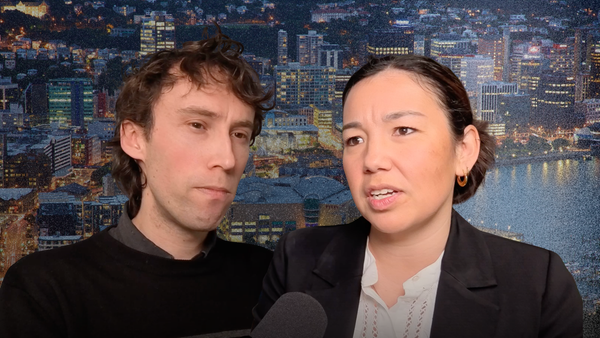
Watch the full interview with Bryce Edwards below.
Additional research by Hannah Patterson.