Abby Martin on Earth's Greatest Enemy: war, oil and the climate crisis

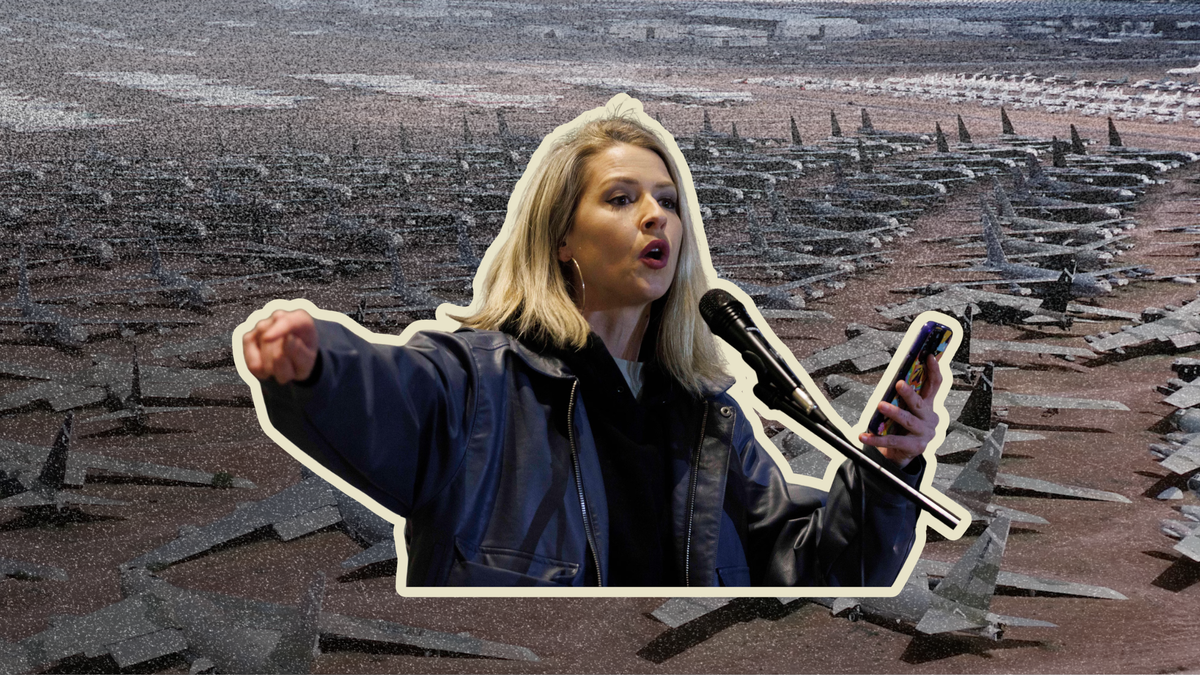
Climate change and war are usually treated as separate issues. Journalist Abby Martin says they're inseparable.
One of the defining but often overlooked facts of our time is the extraordinary footprint of the US military, whose 800 or so bases encircle the planet.
These bases help make the US military the world's largest institutional emitter: it consumes 270,000 barrels of oil per day, emitting more carbon dioxide annually than 150 countries combined. And yet, these emissions are excluded from global emissions targets.
In her new documentary, Earth's Greatest Enemy, journalist Abby Martin, co-founder of The Empire Files, argues that this omission is just the tip of the iceberg when it comes to the devastating environmental impacts of US militarism around the world.
These impacts are also symptoms of a deeper problem: the entanglement of the most powerful military in history with the global fossil fuel economy.
"The expansion of fossil fuels and the expansion of US militarism really go hand in hand," Martin says. "We have basically justified the continuous expanse of our military in order to secure more fossil fuel around the planet."
So what does this mean for the struggle to save a liveable planet?
This week on Public Interest, Ollie Neas speaks to Abby Martin about her new documentary, why climate politics cannot be separated from questions of war, empire and geopolitical power, and the crucial role that New Zealand can play in fighting back.
Watch the full conversation below and subscribe to Public Interest for more discussions making sense of politics and power in Aotearoa.
Earth's Greatest Enemy screens Thursday 30 July at The Capitol cinema in Auckland and is available to stream online.
Research by Hannah Patterson.