
Bird flu has reached New Zealand. Is it a sign of things to come?

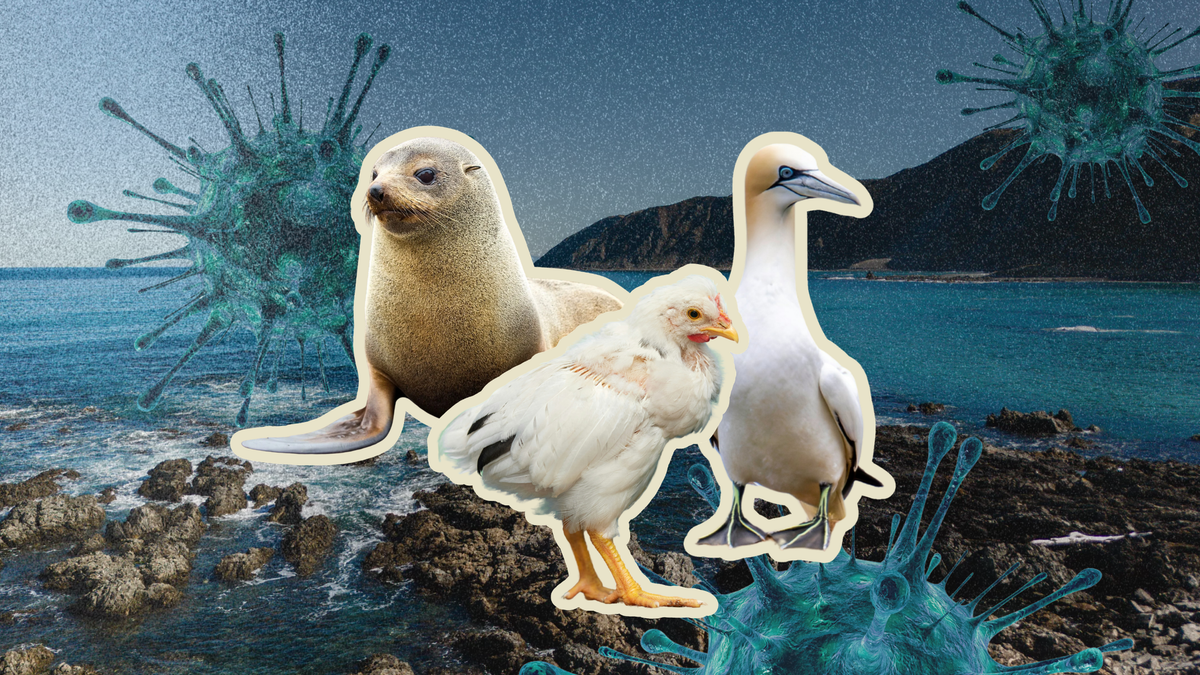
A highly pathogenic strain of bird flu has been causing carnage around the world. Now it’s made it to New Zealand. What can it tell us about the pandemics of tomorrow?
Since emerging around 2019, a highly pathogenic strain of H5N1 bird flu has swept through Europe, Africa and the Americas, killing huge numbers of wild birds, prompting the culling of millions of domestic poultry, causing mass die-offs among seals and sea lions, and spreading into dairy cattle in the United States.
Now it has reached New Zealand.
Since July, H5N1 has been detected in three wild birds in the Wellington region. So far, there is no evidence of a wider outbreak. How worried should we be? Is New Zealand prepared for a major outbreak of bird flu? And why are diseases like H5N1 becoming more common?
This week on In Brief, Ollie Neas talks to Nigel French, a Distinguished Professor of Infectious Disease Epidemiology and Public Health at Massey University, about the arrival of bird flu in New Zealand, the threat it poses to our wildlife and agriculture, and the “perfect storm” driving the emergence of new infectious diseases.
Watch the full conversation below and subscribe to Public Interest for more discussions making sense of politics and power in Aotearoa.
This episode was produced by Micah Geiringer and edited by Jeremy Leveridge.